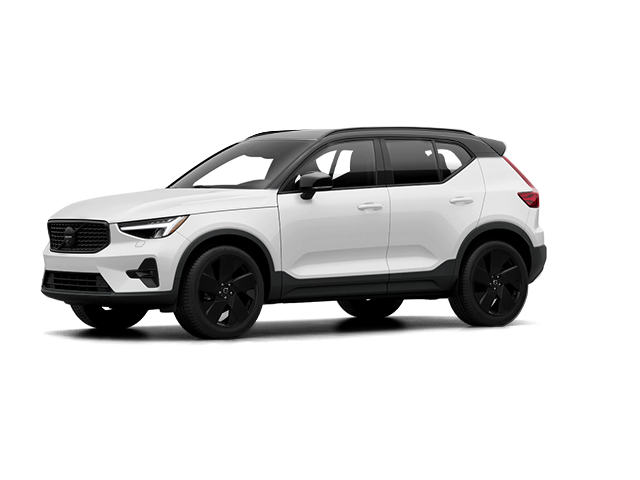
Photo for illustrative purposes only.
Find out moreVolvo Cars Oakville

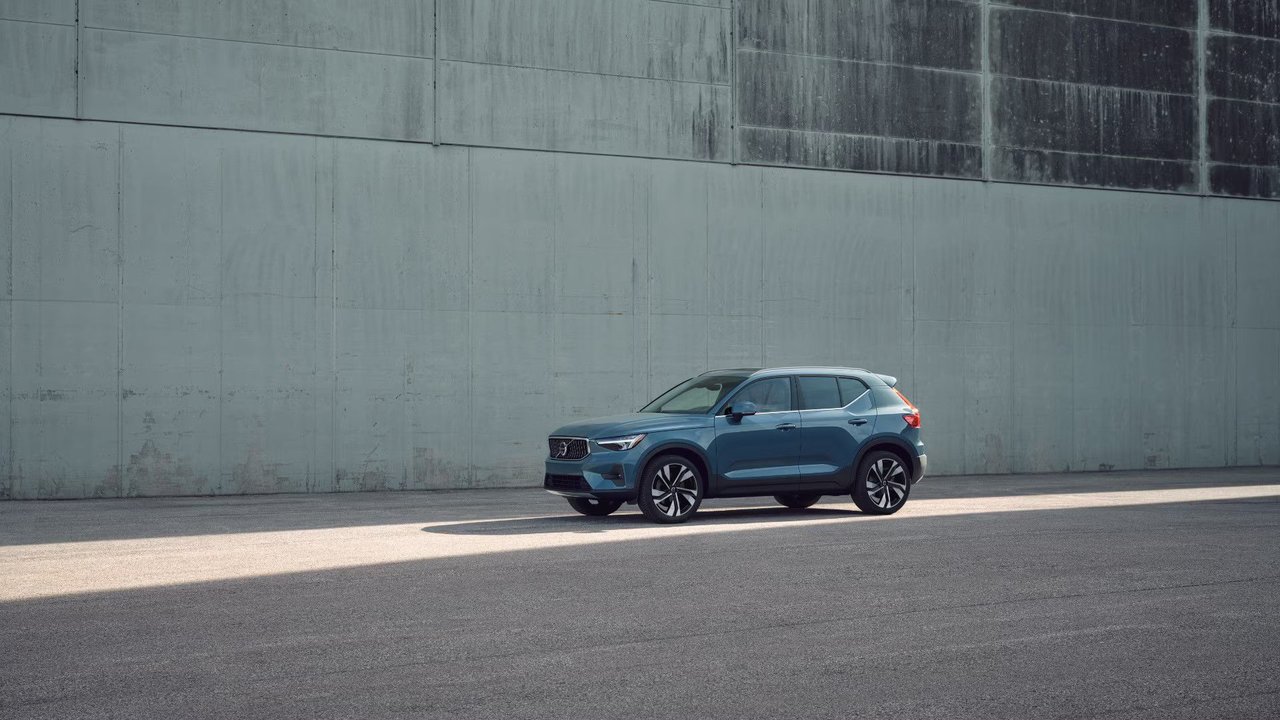
The 2026 Volvo XC40 uses a B5 AWD mild hybrid powertrain — a system that combines a turbocharged petrol engine with a 48V electrical assist layer and permanent all-wheel drive. It does not plug in. It does not ask you to change how you drive. It simply recovers energy that would otherwise be lost during braking, stores it in a small 48V battery, and uses it to reduce the load on the combustion engine during acceleration. The result is a daily driver that costs less to run than a conventional petrol SUV of comparable performance — without any of the infrastructure or behavioural changes that come with a plug-in vehicle.
This article explains exactly how the XC40 B5's powertrain is built, how the mild hybrid system operates in practice, and what the combination of components means for the fuel economy figures you see in the showroom.
The XC40 B5's engine is a 2.0 L inline 4-cylinder turbocharged unit (B420T2) with a 10.5:1 compression ratio and 1,969 cm³ displacement. Maximum output is 247 hp at 5,400–5,700 rpm. Maximum torque is 258 lb-ft, available from 1,800–4,800 rpm. That broad torque band means the engine pulls strongly from low in the rev range, which matters most in city driving and during highway merges.
The engine drives through an 8-speed Geartronic automatic transmission. All-wheel drive is permanent — both axles receive power at all times, managed electronically to distribute torque based on traction conditions. Ground clearance is 205 mm, the highest of any Volvo mild hybrid passenger SUV for 2026.
The "mild hybrid" label describes a specific architecture: a 48V battery system integrated into the drivetrain that supplements (but does not replace) the combustion engine. This is fundamentally different from a plug-in hybrid or a full hybrid. There is no large battery to manage, no electric-only driving mode, and no charging port on the car.
The system operates through an Integrated Starter Generator (ISG) rated at 13 hp. This component serves two functions. First, during deceleration and braking, it acts as a generator — capturing kinetic energy that the car produces as it slows down and storing it in the 48V battery pack. Second, during acceleration, it operates as a small electric motor — feeding that stored energy back into the drivetrain to reduce the load the engine carries.
The 48V electric motor in the XC40 produces 10 kW of power and 40 Nm of torque. These figures are modest on paper, but the timing of that assist is what matters. The electric contribution arrives precisely during the moments of highest fuel demand: initial acceleration from rest, low-speed surges in city traffic, and pull-away after a stop. This is when combustion engines are least efficient, and offsetting even a portion of that demand with stored electrical energy reduces consumption meaningfully.
NRCan's 2026 fuel economy figures for the XC40 B5 AWD are 10.1 L/100 km city, 7.8 L/100 km highway, and 9.1 L/100 km combined. The city figure is particularly relevant to how the mild hybrid system works. Stop-start urban driving generates more frequent braking events, which means more energy recovery and more electrical assist available during pull-away. Drivers who cover significant urban mileage see proportionally more benefit from the 48V system than those who drive mostly at highway speed.
The highway figure of 7.8 L/100 km reflects the XC40's aerodynamic profile (Cd 0.34) and the engine's fuel mapping at cruise speeds. At steady highway velocities, the mild hybrid assist contributes less, but the engine's efficiency at those speeds means the combined figure remains strong.
|
Driving Cycle |
Fuel Economy |
|---|---|
|
City |
10.1 L/100 km |
|
Highway |
7.8 L/100 km |
|
Combined |
9.1 L/100 km |
The XC40 B5 ranks first in the 2026 Volvo mild hybrid SUV lineup on the NRCan combined cycle — 0.1 L/100 km ahead of the XC60 B5 and 1.3 L/100 km ahead of the XC90 B6. Its weight advantage — 1,726–1,780 kg curb weight — is a meaningful factor here. Less mass requires less energy to accelerate and maintain speed, and the 48V system compounds that advantage by reducing peak engine demand.

For buyers considering both the XC40 mild hybrid and the all-electric EX40, the powertrain choice is practical rather than philosophical. The EX40 Single Motor returns 476 km of electric range (NRCan 2026) at 2.2 Le/100 km, and the Twin Motor delivers 418 km at 2.5 Le/100 km. The EX40 is a full electric vehicle requiring regular home or public charging.
The XC40 B5 requires no charging infrastructure, runs on regular petrol, and costs less to purchase. For drivers who cover varied distances — including long-distance trips where charging infrastructure can be inconsistent — the mild hybrid offers predictable, familiar operation without range management.
The XC40 B5's mild hybrid system works without any owner involvement. There is nothing to charge, no mode to select, and no behaviour change required. The 48V battery charges and discharges automatically every time the car moves. For buyers who want improved efficiency over a conventional petrol vehicle but are not ready to adopt electric vehicle habits, this powertrain delivers genuine fuel savings in a completely transparent way.
The system also eliminates the engine-off coasting hesitation sometimes felt in full stop-start systems. The ISG restarts the engine smoothly and quickly, so the mild hybrid system is largely invisible in daily driving — which is exactly how it is designed to operate.
The mild hybrid system makes more sense on the road than it does on paper — particularly in the kind of stop-and-go driving that's most common around Oakville. If you want to feel how the 48V assist layer behaves during city acceleration, drop into Volvo Cars Oakville and ask for a drive route that puts it through its paces.
Photo for illustrative purposes only.
Find out more
Active Air Suspension on the 2026 Volvo XC90 Ultra, Explained
A seven-seat SUV spends its life doing two different jobs: soaking up a rough commute and staying flat through a highway lane change with a full...
Read more
Integrated Booster Cushions: Which 2026 Volvo XC90 Trim Has Them Built In?
Shopping a three-row SUV with car-seat years still ahead means looking past horsepower and straight at the second row. For Ontario families...
Read more
Is the 2026 Volvo XC40 Big Enough for a Family of 4?
A compact SUV has to do a lot of jobs at once: car seat hauler, grocery getter, weekend escape vehicle. If you’re an Ontario family of two adults...
Read morePowered and developed by
